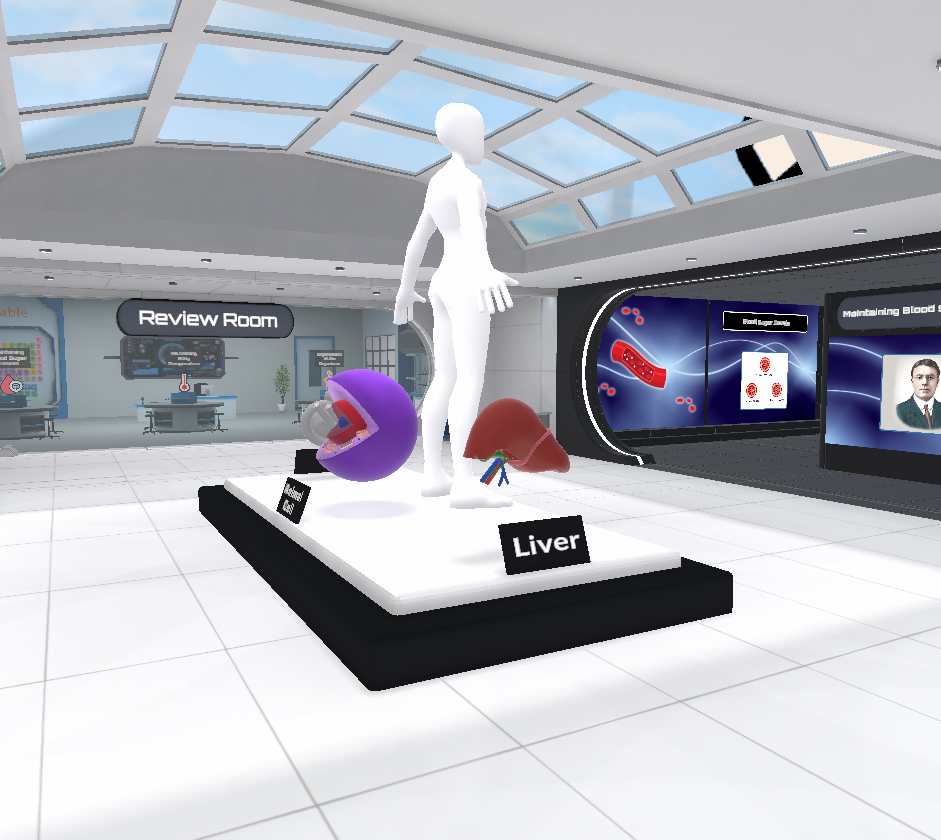
Biology Museum
A large-scale, immersive virtual Biological Science Museum Campus composed of five interactive museum buildings: Systems, Cells, DNA, Survival, and Energy. Each building functions as its own WebGL-based XR experience, featuring exhibit halls where students explore biological concepts through hands-on interactions, 3D models, and guided learning.
- ROLE
- Lead Unity Developer & Designer
- PLATFORMS
- Browser (WebGL XR Experiences) / Desktop & Mobile Web Access
My contributions
- 01
Multi-Experience Architecture: Designed and developed a modular system of five separate WebGL museum environments connected through a unified campus hub.
- 02
Interactive Exhibit Development: Implemented educational interactions including matching, sequencing, drag-and-drop, and quiz-based activities within each exhibit.
- 03
3D Scientific Visualization: Integrated optimized 3D models to represent biological processes such as mitosis, DNA structure, and energy cycles.
- 04
Navigation & UX Systems: Developed an interactive map and guided navigation tools to help users seamlessly explore the campus.
- 05
WebGL Optimization & Deployment: Ensured all experiences were optimized for browser-based performance, meeting load time, accessibility, and cross-device compatibility standards.
Overview
A large-scale, immersive virtual Biological Science Museum Campus composed of five interactive museum buildings: Systems, Cells, DNA, Survival, and Energy. Each building functions as its own WebGL-based XR experience, featuring exhibit halls where students explore biological concepts through hands-on interactions, 3D models, and guided learning. The campus acts as a central hub, allowing learners to navigate between disciplines while engaging with dynamic educational content designed to reinforce core life science standards.
Purpose
Teach foundational biological science concepts through experiential learning. By combining interactive exhibits, gamified assessments, and visualized scientific processes, students develop a deeper understanding of systems within living organisms, cellular functions, genetics, evolution, and ecological energy flow.
Core features
- 01
Exhibit Hall Learning Flow: Each museum contains multiple exhibit hallways with 5–8 stations combining visual content, narration, and interactive elements.
- 02
Scientific Interactions: Players engage with biology concepts through activities like sequencing processes, completing Punnett squares, and building food webs.
- 03
End-of-Hall Assessments: Each hallway concludes with a gamified learning interaction to reinforce key concepts.
- 04
Campus Navigation System: A centralized hub with directional UI and map-based navigation enables seamless movement between museum buildings.
- 05
QR Code Integration (AR Extension): Select 3D models are exported and linked via QR codes for extended augmented reality experiences.
Challenges
- 01
Scale & Modularity: Balancing five separate museum experiences while maintaining consistency across systems and UI.
- 02
Performance Constraints (WebGL): Optimizing large, asset-heavy environments to run smoothly in-browser across devices.
- 03
Educational Accuracy vs Engagement: Translating complex biological processes into intuitive, interactive experiences.
- 04
Cross-Team Dependencies: Coordinating with external teams for curriculum, QR assets, and feedback integration.
Solutions
- 01
Modular Development Pipeline: Built reusable systems for exhibit interactions and UI to streamline development across all five museums.
- 02
Batch-Based Delivery Workflow: Delivered environments in iterative batches with structured feedback loops to ensure quality.
- 03
Optimized Asset Strategy: Used lightweight, optimized 3D models and efficient scene management for WebGL performance.
- 04
Guided Interaction Design: Designed intuitive user flows with clear navigation and feedback systems to support independent learning.
Accessibility
- 01
Cross-Platform Support: Designed for desktop and mobile browsers.
- 02
Keyboard Accessibility: Meets A11Y interaction standards.
- 03
Guided Learning: Narration and structured flow support different learning styles.
- 04
Performance Optimization: Load times under two minutes with structured loading systems.