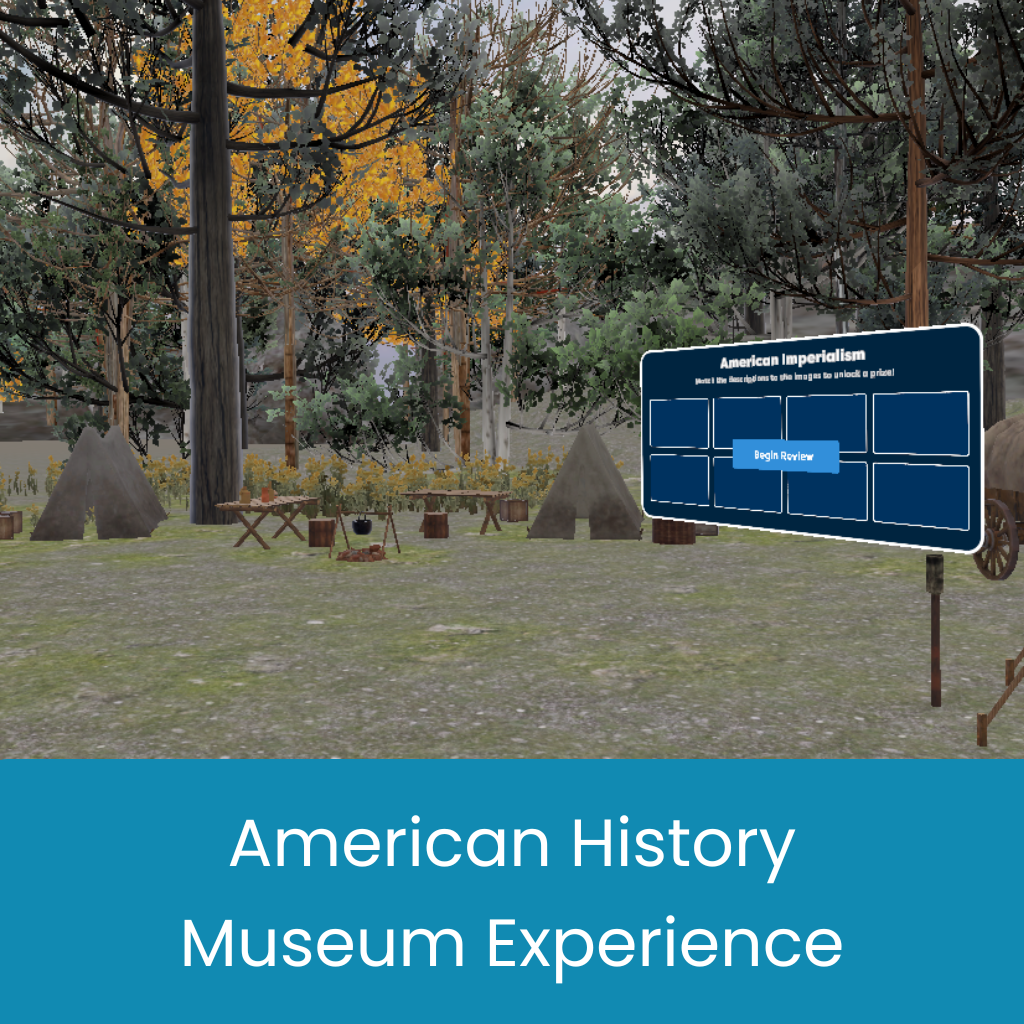
American History Museum
An interactive WebGL/AR experience set in five virtual museum buildings — Early America, Pre-Civil War, Rebuilding America, Industrial Revolution, and Contemporary Times — each showcasing 3D exhibits and artifacts. Students explore, collect historical artifacts, engage in review games, and receive a QR code to view an AR 3D model.
- ROLE
- Lead Unity Developer & Designer
- PLATFORMS
- Desktop, Chrome Browser (museum exploration) / Mobile (QR code scanning and AR model viewing)
My contributions
- 01
Unity Development: Built core scenes, integrated 3D assets, programmed artifact collection systems, and optimized user interactions.
- 02
Level/Exhibit Design: Created museum layouts and immersive 3D environments aligned with each historical era.
- 03
Gameplay Mechanics: Designed and coded review games (matching/puzzle) to reinforce learning.
- 04
Collaboration: Coordinated with educators, artists, and subject matter experts to ensure historical accuracy and smooth user experience.
Overview
An interactive WebGL/AR experience set in five virtual museum buildings — Early America, Pre-Civil War, Rebuilding America, Industrial Revolution, and Contemporary Times — each showcasing 3D exhibits and artifacts from different eras in American history. High school students explore these museums, collect historical artifacts, engage in review games, and ultimately receive a QR code to view an AR 3D model relevant to their era.
Purpose
Developed as a supplemental educational tool for an online high school history curriculum, the project aims to immerse students in American history by allowing them to explore virtual museums and reinforce their learning with interactive content and augmented reality.
Core features
- 01
Artifact Collection: Students locate and collect 3D-modeled artifacts in each era-themed museum.
- 02
Immersive 3D Environments: Traveling into a historically accurate setting after completing each museum exhibit.
- 03
Review Games: Matching or puzzle-based minigames to reinforce key historical facts.
- 04
AR Integration: QR codes leading to an augmented reality model for hands-on interaction in real space.
Challenges
- 01
Performance & Optimization: Handling multiple large museum scenes with detailed 3D assets while ensuring smooth performance.
- 02
Historical Accuracy: Coordinating with educators and historians to ensure each exhibit accurately represents the era.
- 03
User Engagement: Balancing educational content with interactive, game-like mechanics to keep high school students interested.
- 04
Cross-Platform Functionality: Supporting browser exploration and mobile AR experiences without losing fidelity.
- 05
Universal Accessibility: Ensuring the experience was fully navigable for users with various hearing, visual, and physical needs.
Solutions
- 01
Scene Streaming & Asset Management: Implemented scene streaming, texture compression, and optimized 3D models to maintain stable frame rates.
- 02
Collaboration with SMEs: Worked closely with subject matter experts to factcheck exhibits and ensure authenticity.
- 03
Engaging Mechanics: Designed puzzle-style review games and collectible artifacts to make learning fun.
- 04
Accessibility by Design: Built keyboard-only controls from the start, used high-contrast UI elements, and implemented full audio narration.
Accessibility
- 01
Keyboard-Only Navigation: All interactive elements can be accessed and completed without a mouse.
- 02
High Contrast Visuals: Color schemes and UI elements are designed for clarity to assist those with visual impairments.
- 03
Full Voiceovers: All textual content is voiced so students with hearing or reading challenges can still engage.